

Are Expensive Wine Tastings Really Worth It?
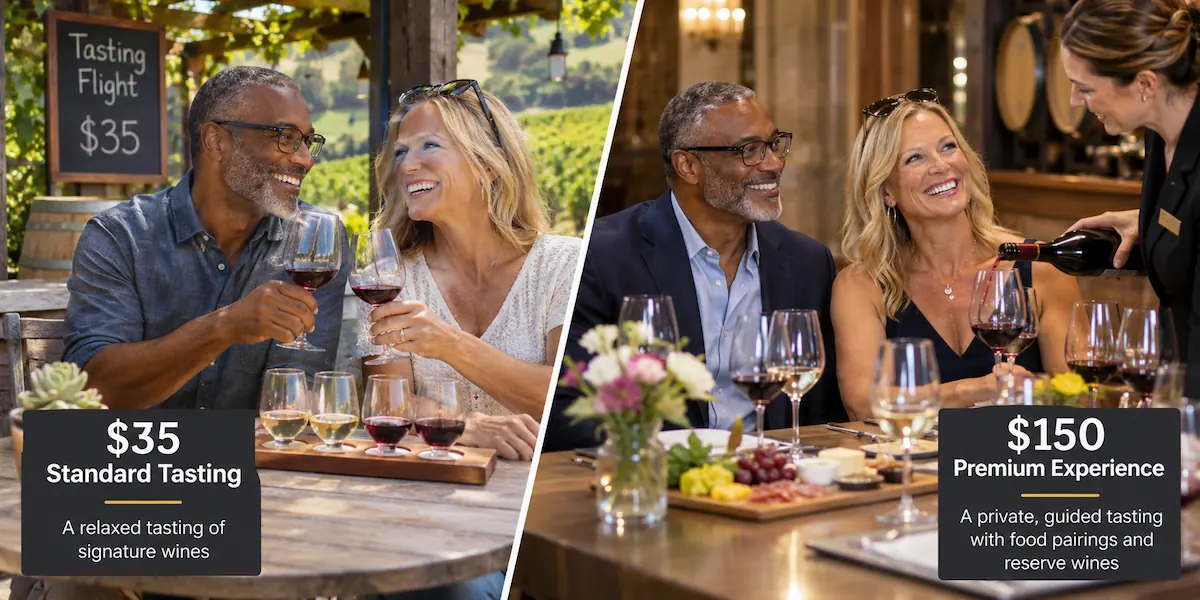
I've noticed something interesting when looking at winery tasting prices. At one winery, you might spend $25 or $35 for a tasting. At another, you could spend $100, $150, or even several hundred dollars per person.
Both wineries might produce excellent wine. Both might have beautiful views and knowledgeable staff. So what makes one tasting worth five times as much as another?
It's a question I think more people should ask before booking a wine tasting trip.
I'm certainly not against an expensive tasting. There are times when paying extra for a special experience makes sense. But I've never believed that spending more automatically means having a better time.
When I think about a memorable wine tasting, I think about the people I'm with, the wines we discover, the conversations, and the atmosphere. Six months later, those are the things we're likely to remember—not necessarily how much we paid.
Let's look at what wine tastings actually cost, what you get for the money, and when paying more might be worth it.
What Does a Wine Tasting Cost in 2026?
At Plan Wine Tasting, we researched published tasting experiences at 199 wineries across six major U.S. wine regions between January and August 2026.
Our findings might surprise you.
The average starting tasting price among wineries with published prices was $39 per person. The average highest-priced experience captured in our research was $99, although individual wineries offered experiences costing substantially more.
Here is what we found by region:
| Wine Region | Average Starting Tasting | Average Top Experience |
|---|---|---|
| Napa Valley | $67 | $190 |
| Sonoma County | $37 | $108 |
| Paso Robles | $31 | $82 |
| Willamette Valley | $43 | $81 |
| Finger Lakes | $14 | $28 |
| Walla Walla | $27 | $61 |
| All Six Regions | $39 | $99 |
*Source: Plan Wine Tasting — 2026 State of U.S. Winery Tastings. These averages reflect the wineries studied, not every winery in each region. Top-experience prices are the highest published options captured in the study.*
The regional differences are substantial.
For example, the average starting tasting price in Napa Valley was nearly five times the Finger Lakes average.
Does that mean Napa produces wine that's five times better? Of course not.
Wine quality is subjective, and tasting fees reflect considerably more than what ends up in your glass.
What Are You Actually Paying For?
When a winery charges $100 or $150 for a tasting, it's easy to assume you're paying primarily for more expensive wine.
Sometimes that's true, but frequently you're paying for an entirely different type of experience.
A premium tasting might include:
- A private host dedicated to your group.
- Access to limited-production or older library wines.
- A guided vineyard or production facility tour.
- Food prepared specifically to complement the wines.
- A private tasting room or exclusive area of the property.
- A longer, more personalized experience.
Some wineries have invested heavily in beautiful tasting facilities, caves, restaurants, and hospitality programs.
Those things cost money to operate, and it's reasonable for wineries to charge for them.
The important question is whether those extras matter to you.
If you love learning about winemaking, spending two hours with a knowledgeable host could be worth every penny.
If you'd rather sit outside with friends, enjoy the vineyard views, and taste a few good wines, a simpler experience might be more enjoyable.
Neither preference is wrong.
A Real Example: $40 or $165 at the Same Winery
One of the best ways to understand the difference is to compare experiences offered by the same winery.
PEJU Winery in Napa Valley publishes several tasting options, including:
| Experience | Published Price |
|---|---|
| Taster's Trio | $40 |
| Classic Seated Tasting | $65 |
| Heritage Tasting | $85 |
| Chef's Tasting Experience | $165 |
Prices from PEJU's published visit information, checked November 2026. Offerings and availability can change.
A couple choosing the $40 experience would spend $80 before taxes or additional purchases.
The same couple booking the $165 experience would spend $330.
That's a $250 difference for two people.
The more expensive option includes a substantially more elaborate food-and-wine experience, so the comparison isn't simply about the number of wines poured.
But is that difference worth $250?
I'd look at what kind of day I was planning.
For a special anniversary or a trip built around food and wine, the chef's experience might be exactly what I wanted.
For an afternoon visiting three wineries with friends, I'd probably choose something simpler and use the savings for another tasting or a nice dinner.
That's the distinction I think matters.
Does More Expensive Mean Better Wine?
Not necessarily.
Wine pricing is influenced by several things, including vineyard location, grape production, aging, limited availability, brand reputation, and demand.
A wine made from a small, highly regarded vineyard might cost considerably more than another excellent wine from a larger producer.
That doesn't guarantee you'll prefer drinking it.
I think this is one of the most enjoyable things about wine tasting. You can put two glasses of wine in front of someone, explain that one bottle costs $30 and the other costs $150, and still have no idea which one that person will prefer.
Our tastes are personal.
Some people enjoy big, bold Cabernet Sauvignon. Others prefer lighter Pinot Noir or crisp Sauvignon Blanc.
Someone who doesn't particularly enjoy heavily oaked Chardonnay isn't suddenly going to love it because the bottle costs $100.
My advice is simple: don't let the price convince you that you should like a particular wine.
Taste it, decide what you enjoy, and trust your own palate.
When I Think a Premium Tasting Is Worth the Money
There are situations where I'd seriously consider spending more.
When the experience offers something genuinely different.
A private cave tour, a barrel tasting, or an opportunity to taste rare wines can be difficult to duplicate with a standard tasting flight.
For example, Del Dotto Vineyards in Napa Valley offers cave experiences that involve tasting wines directly from barrels. That's different from sitting at a counter and sampling finished wines.
When it's a special occasion.
An anniversary, milestone birthday, or a once-in-a-lifetime wine country vacation might justify spending extra.
When I want to learn something.
If the experience offers meaningful time with a knowledgeable guide and an opportunity to understand how the wines are produced, the additional cost can be worthwhile.
When the food is part of the experience.
A well-designed food and wine pairing can demonstrate how food changes the way we experience wine.
These are situations where you're purchasing more than a tasting. You're purchasing an experience.
And sometimes that's exactly what you want.
When I Would Save My Money
There are also times when I wouldn't pay extra.
If I'm planning to visit three wineries in one day, I probably don't need three premium experiences.
That's a lot of money, time, and wine.
I also wouldn't pay more simply because a winery has a recognizable name or because an expensive tasting sounds impressive.
And I'd be cautious about paying significantly more for a reserve flight without understanding what makes those wines different.
If the winery can't clearly explain what you're getting for the higher price, I would probably stay with the standard tasting.
Another consideration is group size.
A $50 tasting for six friends costs $300. Increase that to $150 per person, and the total becomes $900.
That's a $600 difference for one winery stop.
For that amount, the group could enjoy several additional activities during the trip.
Wineries Are Beginning to Rethink Tasting Fees
There's another interesting development worth mentioning.
According to reporting on the 2026 WineBusiness Monthly Tasting Room Survey, 7% of surveyed wineries had already lowered their tasting fees, and another 6% were considering doing so.
That suggests at least some wineries recognize that tasting costs have become a concern for visitors.
I think that's encouraging.
Wine country should offer experiences for different budgets. Not everyone visiting a winery is looking for a luxury afternoon.
Some people are just beginning to explore wine. Others are visiting with friends and want a relaxed, affordable experience.
And others are serious collectors who genuinely value private appointments and rare wines.
There should be room for all of them.
*Source: WineBusiness Monthly — Tasting Fees Shift as Wineries Balance Access and Costs.*
My Approach: Mix Expensive and Affordable Tastings
If I were planning a wine country trip, I'd aim for a combination of experiences.
Rather than choosing the most expensive tasting at every winery, I'd identify one experience that looks particularly special and build the day around it.
Here's an example for two people visiting three wineries.
| Tasting | Price Per Person | Total for Two |
|---|---|---|
| First winery: standard tasting | $35 | $70 |
| Second winery: premium experience | $125 | $250 |
| Third winery: relaxed tasting | $40 | $80 |
| Total | $400 |
Illustrative itinerary, not a quote from specific wineries. Excludes taxes, food outside the tasting, transportation, and wine purchases.
Now compare that with booking three $125 premium experiences. The tasting fees alone would total $750 for two people.
That's a $350 difference.
Would the more expensive day be better? Maybe. But I certainly wouldn't assume so.
I'd rather have one truly memorable premium experience and leave some flexibility in the budget.
I'd also avoid scheduling too many wineries. Three tastings in a day is usually plenty, especially when you include lunch, travel time, and opportunities to enjoy the scenery.
And, of course, if everyone plans to taste wine throughout the day, arranging a designated driver or professional transportation is important.
Five Questions I'd Ask Before Booking an Expensive Tasting
Before spending $100 or more per person, I'd want answers to a few questions.
1. How many wines will we taste?
Not because more is always better, but because I'd like to understand what the experience includes.
2. What makes this tasting different from the standard offering?
Is it the wine selection, the private setting, the food, or access to areas of the winery that aren't normally available?
3. How long does the experience last?
A 45-minute tasting and a two-hour guided experience are very different ways to spend an afternoon.
4. Is any of the tasting fee credited toward a wine purchase?
Some wineries waive or credit tasting fees with qualifying purchases. Others don't. It's worth checking before your visit.
5. Would I enjoy the experience even if I didn't love the wines?
This might be my favorite question.
If I'm paying for a beautiful property, an interesting tour, good food, and a great afternoon with friends, I can appreciate the experience even if none of the wines becomes a new favorite.
If I'm paying primarily for expensive wines that might not suit my palate, I'd be more hesitant.
Don't Overlook the Less Expensive Wine Regions
One of the most interesting findings from our winery research was just how much tasting prices differ by region.
Napa Valley averaged $67 for a starting tasting, compared with $37 in Sonoma County, $31 in Paso Robles, and just $14 in the Finger Lakes.
Those differences create opportunities for travelers.
If you're interested in exploring Riesling and other cool-climate wines, the Finger Lakes can offer a very different experience from Napa Valley at a considerably lower tasting cost.
If you enjoy Cabernet Sauvignon, Syrah, and red blends, Walla Walla and Paso Robles offer interesting alternatives worth considering.
I'm not suggesting you choose a wine region solely because tastings cost less.
But if you enjoy discovering new places and new wines, there are good reasons to look beyond the most famous destinations.
You might discover a favorite wine at a winery you've never heard of.
And that can be one of the best parts of the trip.
So, Are Expensive Wine Tastings Worth It?
My answer is sometimes.
I've seen enough variation in winery prices and experiences to believe that tasting fees alone tell you very little about how much you'll enjoy a visit.
A $150 tasting might become the highlight of your vacation. It might offer remarkable wines, an exceptional host, and an experience you couldn't get anywhere else.
But a $30 tasting could be just as memorable for entirely different reasons.
Maybe the owner spends time talking with you. Maybe you discover an unexpected favorite wine. Maybe you sit outside with good friends on a beautiful afternoon and simply enjoy being there.
To me, that's what wine tasting should be about.
I'd rather leave a winery remembering the people, the setting, and a wine I genuinely enjoyed than leave thinking about how much the experience cost.
The best wine tasting isn't necessarily the most expensive one. It's the one you enjoy most.
And sometimes, the memories you take home are worth far more than anything you tasted.
---
Plan Your Next Wine Tasting Trip
Before booking your next winery visit, compare tasting prices, explore different regions, and decide which experiences are worth including in your itinerary.
At Plan Wine Tasting, you can explore wineries, plan your tasting stops, find available discounts, and estimate what your trip might cost.
You can also explore our 2026 State of U.S. Winery Tastings to see how tasting prices compare across six major wine regions.
A little planning can help you spend less time worrying about the cost and more time enjoying the experience.
---